
CLM5: Are the 10 layers in the surface dataset the same as the top 10 layers of 20SL_8.5m?

kylin

kylin
New Member
Hi all,

I have a question about how the soil layer depths defined in the CLM5 technical note relate to the soil layers in the surface dataset.

In the CLM5 Technical Note (Section 2.2.2.1), there is a table that defines the vertical soil structure (node depths, layer thicknesses, and interface depths), which I understand corresponds to the default soil_layerstruct (e.g., 20SL_8.5m).

At the same time, the surface dataset (e.g., PCT_SAND, PCT_CLAY) typically provides soil properties with nlevsoi = 10 layers.

From previous discussions, I understand that during initialization, these 10 layers are mapped onto the upper 10 layers of the model soil structure, and deeper layers (11–20) reuse the 10th layer properties.

My confusion is about the layer-depth relationship:

Is the table in Section 2.2.2.1 (soil layer depths)

  • directly defining the physical depth structure used internally by the model (soil_layerstruct),
  • or is it also intended to define the depth ranges corresponding to the 10 layers in the surface dataset?
In other words:

  • Do the 10 layers in the surface dataset correspond directly to the top 10 layers in the 20SL_8.5m structure (as defined in the table)?
  • Or are the 10 surface dataset layers simply index-based, without a strictly defined physical depth, and only mapped to the model layers during initialization?
Finally, when preparing a custom surface dataset:
Should soil properties be interpolated according to the depth boundaries given in the Technical Note (Section 2.2.2.1) to match the model soil layers?

Thanks very much for your help!
 

oleson

Keith Oleson
CSEG and Liaisons
Staff member
The 10 surface dataset layers are index-based (there are no soil layer structure variables on the surface dataset) and they correspond to the top 10 layers in the 20SL_8.5m structure and mapped during initialization.
If you have soil properties, they should be mapped to the 20SL_8.5m layer structure if feasible.
 

chenyihui

chen
New Member
Hi all,

I have a question about how the soil layer depths defined in the CLM5 technical note relate to the soil layers in the surface dataset.

In the CLM5 Technical Note (Section 2.2.2.1), there is a table that defines the vertical soil structure (node depths, layer thicknesses, and interface depths), which I understand corresponds to the default soil_layerstruct (e.g., 20SL_8.5m).

At the same time, the surface dataset (e.g., PCT_SAND, PCT_CLAY) typically provides soil properties with nlevsoi = 10 layers.

From previous discussions, I understand that during initialization, these 10 layers are mapped onto the upper 10 layers of the model soil structure, and deeper layers (11–20) reuse the 10th layer properties.

My confusion is about the layer-depth relationship:

Is the table in Section 2.2.2.1 (soil layer depths)

  • directly defining the physical depth structure used internally by the model (soil_layerstruct),
  • or is it also intended to define the depth ranges corresponding to the 10 layers in the surface dataset?
In other words:

  • Do the 10 layers in the surface dataset correspond directly to the top 10 layers in the 20SL_8.5m structure (as defined in the table)?
  • Or are the 10 surface dataset layers simply index-based, without a strictly defined physical depth, and only mapped to the model layers during initialization?
Finally, when preparing a custom surface dataset:
Should soil properties be interpolated according to the depth boundaries given in the Technical Note (Section 2.2.2.1) to match the model soil layers?

Thanks very much for your help!
Hi kylin,

I came across the discussion below and have a similar question. I was wondering if you have resolved it?

I am currently working on preparing a custom surface dataset for CLM5. I have observed soil texture data with 6 layers covering 0–200 cm (e.g., 0-5, 5-15, 15-30, 30-60, 60-100, 100-200 cm). I need to convert these 6 layers into 10 layers to replace the soil properties (e.g., PCT_SAND, PCT_CLAY) in the surface dataset.
  • Should I interpolate my 6-layer data to the depth boundaries defined in the CLM5 Technical Note (Section 2.2.2.1, the 20SL_8.5m structure top 10 layer)?
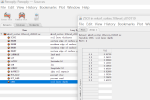
  • Or should I use the depth intervals from an existing file like "mksrf_soitex.10level_c010119.nc" (see figure), which is used to make surface data

    1777439489655.png
 

kylin

kylin
New Member
Hi kylin,

I came across the discussion below and have a similar question. I was wondering if you have resolved it?

I am currently working on preparing a custom surface dataset for CLM5. I have observed soil texture data with 6 layers covering 0–200 cm (e.g., 0-5, 5-15, 15-30, 30-60, 60-100, 100-200 cm). I need to convert these 6 layers into 10 layers to replace the soil properties (e.g., PCT_SAND, PCT_CLAY) in the surface dataset.
  • Should I interpolate my 6-layer data to the depth boundaries defined in the CLM5 Technical Note (Section 2.2.2.1, the 20SL_8.5m structure top 10 layer)?
  • Or should I use the depth intervals from an existing file like "mksrf_soitex.10level_c010119.nc" (see figure), which is used to make surface data

    View attachment 7434
My final choice is the first option: CSDLv2 6 layers → CLM 10 layers (0–152 cm). The soil depth reference I used is Table 2.3: Soil layer structure in the CLM50_Tech_Note.pdf.
 

chenyihui

chen
New Member
My final choice is the first option: CSDLv2 6 layers → CLM 10 layers (0–152 cm). The soil depth reference I used is Table 2.3: Soil layer structure in the CLM50_Tech_Note.pdf.
Dear kylin,

Thank you!

I have a question I'd like to ask you: Have you ever used the CSDLv2 dataset to replace the organic matter density variable (ORGANIC, kg/m³) in CLM5.0?

I noticed that the dataset provides organic carbon content (OC, g/100g) and bulk density (BD, g/cm³), but does not include direct ORGANIC data.

If you have had a similar experience with this replacement, would you be willing to share your approach with me?

Thank you very much for your guidance!
 

kylin

kylin
New Member
亲爱的凯林,

谢谢!

我有个问题想问你:你有没有用CSDLv2数据集替换CLM5.0中的有机物密度变量(有机物,kg/m³)?

我注意到该数据集提供了有机碳含量(OC,g/100g)和体积密度(BD,g/cm³),但不包括直接的有机数据。

如果你有类似的替换经验,愿意分享你的做法吗?

非常感谢你的指导!
Here are the formulas I adopted:
SOM10 = OC10 / 0.58
ORGANIC10 = SOM10 .* BD10 * 10
ORGC10 = ORGANIC10 * 0.58 ./ BD10
Besides, a tip from my data processing workflow: please be careful with the scaling coefficients of the data.
 

chenyihui

chen
New Member
Here are the formulas I adopted:
SOM10 = OC10 / 0.58
ORGANIC10 = SOM10 .* BD10 * 10
ORGC10 = ORGANIC10 * 0.58 ./ BD10
Besides, a tip from my data processing workflow: please be careful with the scaling coefficients of the data.
Thank you so much!
 
Back
Top